



Best Sea Scallop Recipe Ever! Winter Scallop Salad
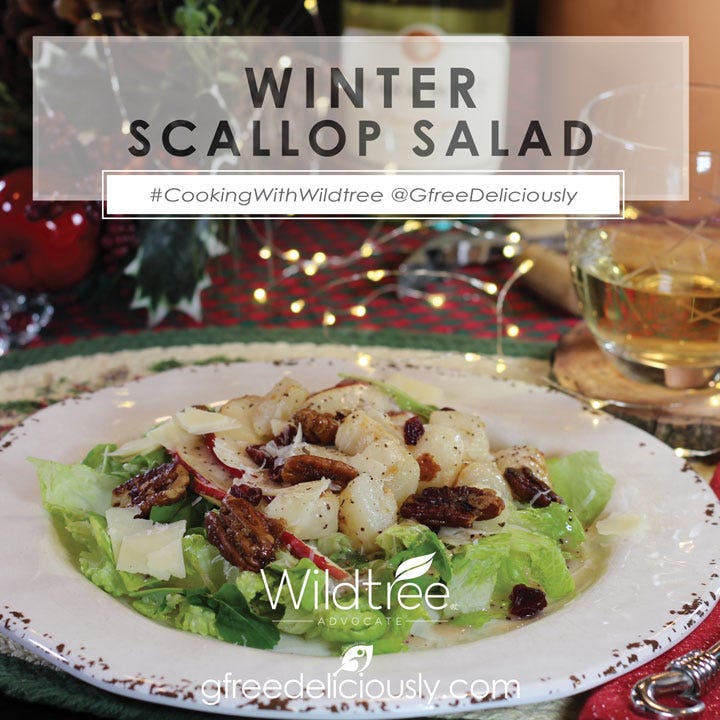
A leafy green foundation is a backdrop for seared sea scallops, seasonal pears, and toasted candied pecans to make this delicious winter salad meal. Add a finishing touch of aged Parmesan or Asiago cheese with Cranberry Poppyseed Vinaigrette for a simple,

Simply the Best Sea Scallop Recipe Ever!
Winter Sea Scallop Salad
It is an elegant meal that is as easy to make as it is delicious to eat! Pair this lovely fresh winter scallop salad with a bottle of American Chardonnay, Pinot Grigio, or your favorite bubbly champagne for an almost instant celebration filled with good food and happy memories made for sharing simple pleasures with special people!
[wprm-recipe-snippet]
(Nutrition information is calculated using an ingredient database and should be considered an estimate.)
SEE FULL NUTRITIONAL FACTS IMPORTANT UPDATE: November 1, 2022 Please note that some ingredient links in this post may have been removed or changed from our original recipe published to reflect new affiliate partnerships.
You will love the simplicity of this recipe!
It’s a crisp, classic salad that’s full of flavor from a handful of fresh ingredients. And while salads, in general, might not be center stage for you during the winter months, this dish is the perfect balance between savory and sweet, with just the right amount of tang for a winter pick-me-up this time of year. Click here for a detailed, printable recipe card.
Looking for an #EasyDinner #HolidayMeal with #BigFlavor? Try this #GlutenFree #ScallopSalad, the perfect #GlutenFreeChristmas #HolidayDinner #SaladRecipe featuring #SeaScallops and #Pears. #Yummy #HealthyChoices for a #WinterSalad #ChristmasDinner! CLICK TO TWEET
Catch the #CookingGfreeDeliciously Wednesday Replay!
Enjoy watching the #CookingGfreeDeliciously Cooking Show video, then click on over to the G-Free Deliciously Wildtree Store to get everything you need for making all eight of the delicious recipes featured in the November Cooking Collection.
What is a Winter Salad?
As a way to convince you to get your greens in year-round, winter salads highlight yummy produce and flavorful ingredients that are more readily available during cooler winter months. Many feature roasted root vegetables, cranberries, winter salad greens, citrus, and fruits that over-winter well. Additionally, many winter salads also incorporate fresh catch seafood and shellfish that reach peak harvests late fall and winter. The options for winter salads are nearly endless, so one can feel free to make substitutions that reflect personal tastes and preferences. In the end, there is no wrong way to enjoy a salad to get your salad fix in all year long!
What are Winter Salad Greens?
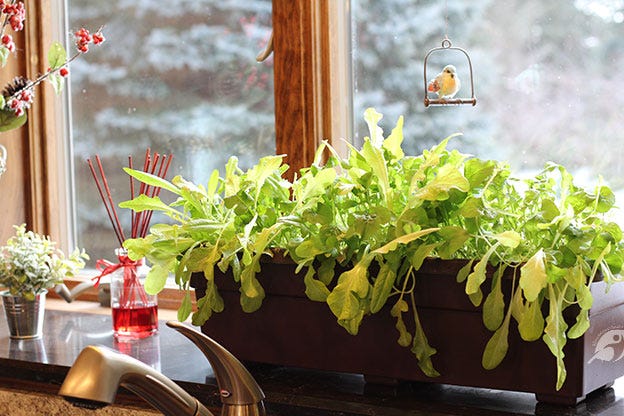
Cool-weather lettuces like Bibb lettuce, Buttercrunch, Leaf, and Romaine lettuce blends are ideal choices to grow in windowsills and cold frames and are available to buy at most grocery stores during the winter months. Greens like arugula, baby spinach, kale, and shaved Brussels sprouts add vibrant flavor and nutrition to the taste. These greens offer new gardeners or salad lovers various colors and textures that can be quickly grown then harvested every few weeks during cold weather.
The lettuce for this recipe
While any cool-weather lettuce will do here, we’ve used a blend of winter-grown lettuces for layers of flavor in our salad. Romaine lettuce is at the top of the crisp varieties we’ve chosen. Followed by a mildly-sweet young leaf lettuce mix of greens for succulent taste, then lastly, a few handfuls of baby arugula grown in a sunny south-facing window add a delicate yet spicy kick to turn the flavor up a notch.
The pears
Adding a certain elegance and eye appeal, crunchiness, and a bit of structure to complement the greens - thinly-sliced Red Anjou pears (pronounced ON-Ju) are lovely for this salad. The taste is fabulous, combining just the right amount of mildly-sweet floral flavor and slightly granular texture that bursts with juiciness from the first bite!
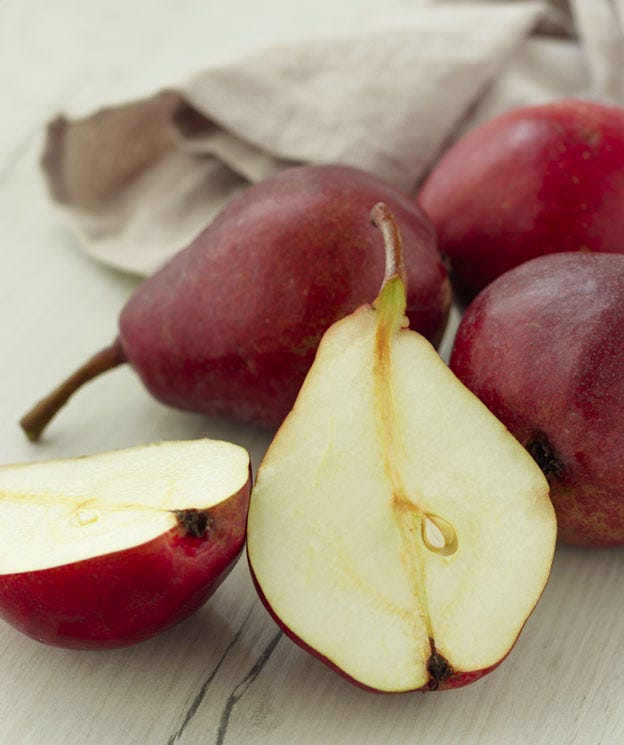
Of course, any nicely ripe pear will do. When buying pears, look for smooth, unblemished fruits with their stems still attached. They should be fragrant and just beginning to soften nearest the stem. They’re ready to eat when they wrinkle a little at the stem end and have a slight give when squeezed or softness at the blossom end. If buying in advance, store them in the refrigerator for 3-5 days, depending on how ripe they are, but for the best flavor, be sure to allow refrigerated pears to come back to room temperature before eating. To use them, we’ve halved them lengthwise, scooped out the core with a melon baller, sliced them thin, then tossed them with a bit of lemon juice to prevent discoloring. Next, arrange the prepared slices on top of the leafy green foundation to begin transforming these ordinary salad greens into a work of art!
The candied pecans
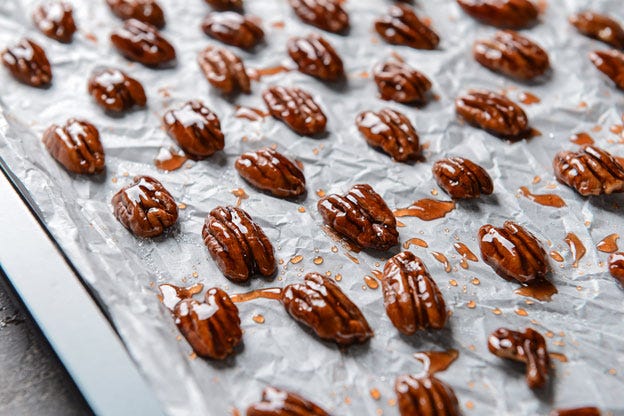
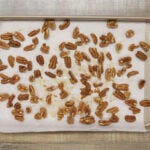
Quickly pan-toasted with butter and brown sugar to bring out a little extra flavor, then transferred to a sheet pan and sprinkled with just enough sea salt to give them a sweet-salty coating while they cool; candied pecans help to finish off this salad with an unexpected crunch. So simple yet such a flavorful way to add depth in taste without being over-powering. We made these candied pecans at the start of this recipe, so they have time to cool to a crunchy caramelized candy crunch while we sear the scallops.
The Scallops
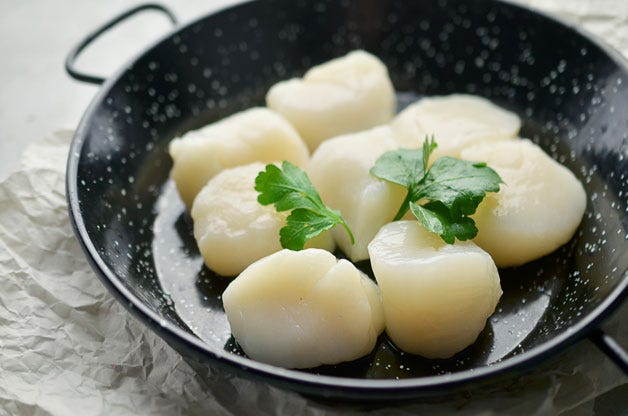
The centerpiece of this salad is the seared sea scallops. Scallops are a type of bivalve mollusk, meaning the meaty muscle inside is surrounded by two shells -- think oysters, mussels, and clams. They are delicious when lightly seasoned with salt and pepper, then seared in roasted-garlic grapeseed oil to infuse a bit of garlicky flavor while cooking in minutes to a melt in your mouth golden crispy crust that contrasts the rich, sweet, briny center. We’ve chosen sea scallops for this recipe for their size (16-20 per pound). Sea scallops are the larger scallops that grow as big as two inches and live in cold ocean waters. In the U.S., they typically are harvested in the Northwest Atlantic Ocean, from Newfoundland to Cape Hatteras, North Carolina. Their mildly sweet flavor and the caramelized crust they get when seared in a super hot pan is the perfect flavor combination to lift the taste of crispy lettuce with the sweet and juicy pear for this salad. Depending on the size you buy, you’ll want to plan 3-5 sea scallops per person.
How to Buy Scallops
You may have noticed that more and more grocery stores are labeling scallops in the fresh seafood case, either “glazed,” “wet,” or “dry.”
What are “glazed” or “wet” scallops?
Scallops commonly harvested by fishing vessels called dayboats (so-called because the boats are only out for a day) are referred to as “glazed or “wet” scallops because of the catching and processing method used in the harvest. These boats come equipped with enormous chainmail mesh pouches or bottom trawls that get lowered into the ocean by pulleys, where the mesh is dragged (or dredged) across the ocean floor; brought up to the boat to cull the catch, then the process is repeated until finished for the day. The tricky part of this harvesting method is that these boats also harvest a considerable bycatch of unintended species caught and trapped inside the trawls. The unintended maritime Mulligan stew is then tossed over the vessel’s side while the prize of scallops is kept and prepared for the marketplace. The scallops are soaked in a preservative phosphate solution and then frozen during the preparation process. This solution makes the scallops absorb more water, plumping them up and increasing the shellfish’s weight. As a result, when wet scallops cook, they will shrink or shrivel up in the pan slightly, and they won’t turn crispy and golden as quickly as they sear because of that extra liquid. The phosphate solution also can give the scallop an off-flavor, and they’re usually not as fresh.
How do “dry” scallops differ?
In contrast to scallops captured by a mechanical drag across the ocean floor, “dive-caught” or “diver scallops” (so-called because SCUBA-clad divers harvest them) are gathered by hand-harvesting. These scallops come from the shallows so as not to disturb the ocean’s floor ecosystem and sea bed habitat, and because of how they are hand-harvested, they tend to be less gritty. Scallops collected sustainably through this hand-collection method are shucked on the boat shortly after being harvested and dry-packed. Dry scallops have not soaked in a preservative bath with chemicals, additives, or solutions, so there is no additional fluid to dilute their flavor when cooked. As a result, compared to wet scallops, dry scallops are darker (more of a beige color, whereas wet scallops are whiter), and they have a more pure fresh, salty flavor. The downside is that dry scallops cost a little more, but knowing that your dollars support an organic, sustainable, and intelligent harvest process is reason enough for many who want the freshest, plumpest meat of these bivalves possible.
The Steps to Perfectly Seared Scallops
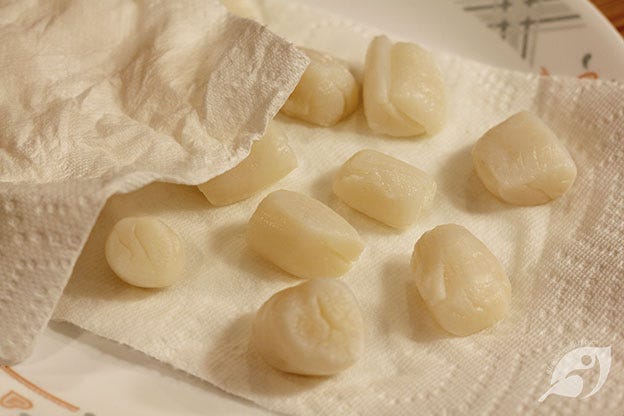
When searing fish, seafood, or any meat for that matter, the first step is to pat the outside dry with a paper towel. If the scallops are wet, they will steam instead of searing. So pat them dry beforehand. I do this when making Pan-seared Pork Chops too!
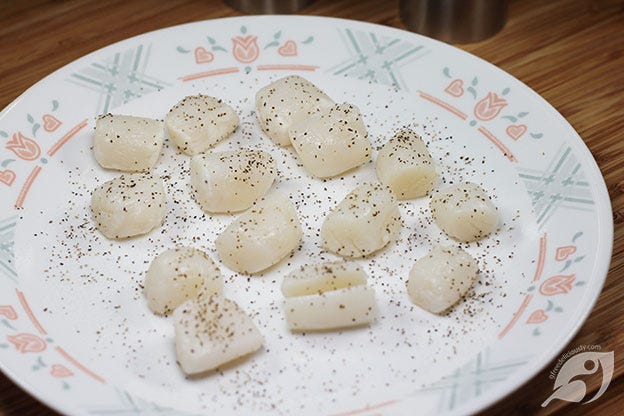
Next, lightly salt and pepper on both sides.
In the next step, I recommend using a cast-iron skillet. Cast-iron is my absolute favorite for searing because the skillet’s carbon content allows it to preheat slowly, and it retains its heat for a long time. A cast-iron skillet can sear in minutes because it keeps its heat so well and gets so hot, making it perfect for searing!
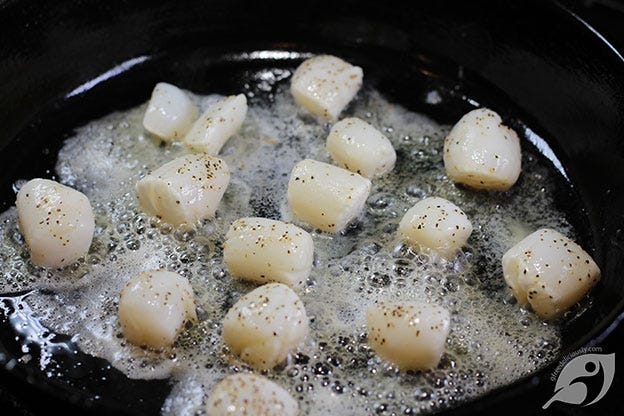
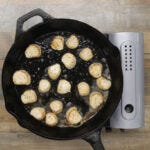
Heat the skillet over medium-high to high heat until it’s hot; add 1 tablespoon Roasted Garlic Grapeseed Oil and heat until the oil begins to shimmer. Place the scallops in the pan with 1 tablespoon butter, making sure to leave enough space not to be crowded so they won’t steam each other. Work in batches if necessary.
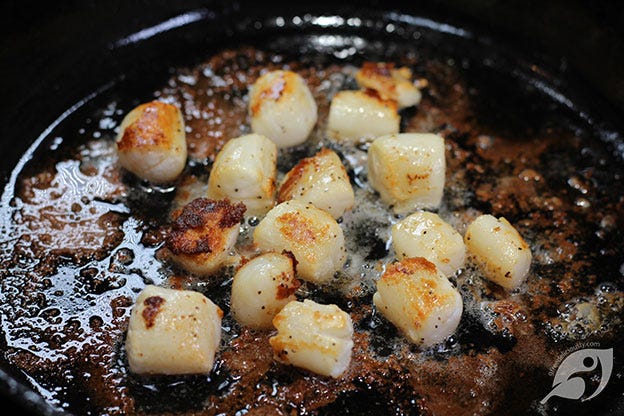
Getting a Perfect Scallop Sear
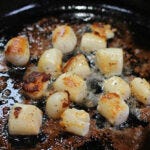
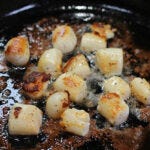
Sear the scallops for about 1 ½-2 minutes on each side. Avoid flipping them until the flesh is opaque to achieve caramelized tender perfection. When done, the scallops will release without sticking to the skillet. Note that the cast-iron retains heat and will continue cooking the scallops unless you take them out. They should have a crispy golden crust on each after searing.
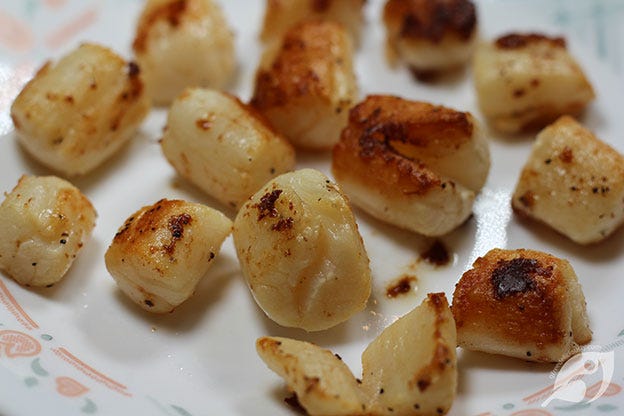
Once the scallops are seared, arrange them on top of the salad greens with pears and candied pecans.
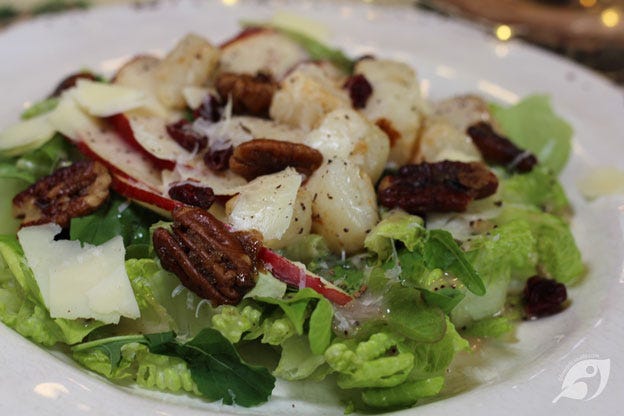
Will Scallops Keep?
Fresh scallops will keep in the refrigerator for up to two days. When fresh from the ocean, they have a sweet, salty smell, and when they begin to spoil, they will take on a stinky fish smell.
Can Scallops be Reheated?
Yes, scallops can be reheated but be careful, when reheating, not to cook them further. Instead, heat slowly until warmed through, so they don’t become rubbery and chewy. I’ve had luck reheating them in the microwave for about 20-seconds at the half-heat setting.
The Cheese (optional – see the recipe card)
Hey, because we’re in Wisconsin, no salad is complete without real Wisconsin cheese!
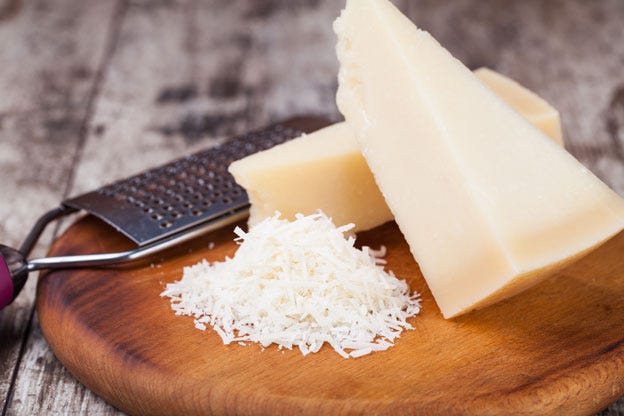
Our first choice is shaved Asiago cheese, with a flavor reminiscent of Parmesan but a bit nuttier and creamier. When it's aged up to nine months, Asiago develops a sharper taste that compliments the salad wonderfully and is delicious when grated or shaved on top. If you can't find Asiago, Parmesan cheese will also be a delicious addition to this salad! Use it grated or shaved. Parmesan is a hard white cheese initially produced in various Italian provinces, including Parma. With its nutty, rich flavor, it's a natural choice for thinly slicing luscious bits to garnish this salad.
The Vinaigrette
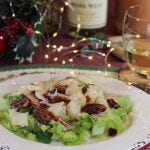
Last but by no means least, we’ve topped it all off with a drizzle of tangy Cranberry Poppyseed Vinaigrette, adding a flawless finish that doesn’t weigh you down. Adding it makes every bite more delicious than the last. Serve immediately!
The wine we’re drinking…

The best wines to naturally enhance the flavor of the scallops and sweetness of the pears in this salad begs for a slightly dry chilled wine. A couple of our favorites include:
Chardonnay -
An incredibly versatile white wine loved for its versatility. Chardonnay’s taste can differ depending on where it’s grown, who makes it and how it is processed. It is often a dry, medium to full-bodied wine with moderate acidity and alcohol. Crowd-pleasing styles can run the gamut from apple, pear, and creamy lemon to exotic citrus floating over pear flavors and hints of tropical fruits. We prefer a Chardonnay that has aged in oak. This Chardonnay type sings in delicious harmony with the seared scallops’ decadent flavors for this dish with vanilla notes from its aging in oak.
Pinot Grigio –
Our Choice is an American Pinot Grigio noted for its more exaggerated fruit flavors with less acidity than its European counterparts. Although different than an Italian Pinot Grigio (dry that’s crisp and tart with a bitter almond note) or French Pinot Gris (light-bodied and velvety tannins with a faint note of honey) we love the American Pinot Grigio because it hits all the right notes. One of our favorites is the Mark West Pinot Grigio. Lightly straw in color; this medium-bodied wine highlights the flavors and aromas of honeydew, stone fruit, and lime citrus. The bright, fresh fruit flavor balances ripeness with crispness, and a subtle, clean, lingering fruity finish.
Champagnes –
You’ll never go wrong with an Asti Spumante from Italy, but if you’re looking for an alternative to world-famous Champagne, California’s Sonoma County, Carneros, and Anderson Valley regions have carved out a niche for quality sparkling wines. Often priced less than Champagne, sparkling wines can be an affordable luxury, making them even better for those on a tight budget. Check out the selection of many wines available from the California Wine Club!
Before we go, and a Christmas wish...
Thank you for being part of my world. And many thanks for allowing me to be part of yours throughout the past year. Whether you’ve read my emails and posts on the website, made, liked, or shared my recipes, or hung out with me on social media, it means the world to me, and I’m very grateful, so thank you! Sending my wishes for a healthy and happy holiday season, a very Merry Christmas to share with those who are special to you, whatever that looks like, and a New Year filled with every good thing! Stay hopeful and strong. Embrace and appreciate all the times you’re able to spend with loved ones gathered around your table. XXO Kymberley P.S. Let me know if you try this recipe. Share your thoughts. Click the blue-green comment bubble at the bottom left corner of your screen to let me know in the comment area below. I would love to hear!
Enjoy the Recipe!
Learn how to adjust the serving size, CLICK HERE
Winter Scallop Salad
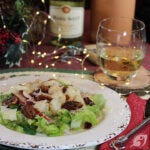
A leafy green foundation is a backdrop for seared sea scallops, seasonal pears, and toasted candied pecans to make this delicious winter salad meal. Add a finishing touch of aged Parmesan or Asiago cheese with Cranberry Poppyseed Vinaigrette for a simple, tasteful dish to make any day a cherished holiday!
Small non-stick skillet
Cast Iron Skillet
Cutting Board
Parchment paper
Utensils (Knife, Measuring Cups & Spoons, Rubber Spatula or Large Spoon, Tongs)
For the Candied Pecans
3 tablespoons unsalted Butter (divided)
2 tablespoons Brown Sugar
1 cup raw Pecan halves
For the Seared Scallops
1 pound Sea Scallops
¼ teaspoon Salt
¼ teaspoon Black Pepper
1 tablespoon Oil (Wildtree Roasted Garlic Grapeseed Oil recommended)
For the Salad
8 ounces Lettuce
2 Red Anjou Pears (sliced thin)
Cranberry Poppy Seed Vinaigrette*
To make the Candied Pecans
Line a sheet pan with parchment paper. Melt 2 tablespoons butter and brown sugar in a small non-stick skillet over medium heat. Add the pecan halves and toss to coat. Cook for 2-minutes, stirring often. Transfer the pecans to the prepared sheet pan. Separate pecans so they do not touch each other. Set aside to cool.

To make the Seared Scallops
Remove the small muscle from the side of the scallops if still attached. Rinse in cold water, drain well and pat the scallops completely dry using a paper towel. Season both sides with salt and pepper.

Heat oil and the remaining 1 tablespoon of butter on a large cast-iron skillet over high heat

Using high heat, preheat the cast-iron skillet and oil until it starts to shimmer (just before it begins to smoke). As soon as it’s there, add your scallops, and reduce the heat to medium to medium-high heat (300°F to 375°F). Without moving the scallops, sear them until they are golden-browned and crisp, about 1 ½-2 minutes on each side. Resist the urge to move the scallops around or look underneath as the crust develops. When they are ready to turn, they will gently release from the pan. If the scallops are sticking to the pan, give them a little longer to produce a flavorful golden-brown crust.

To assemble the Salad
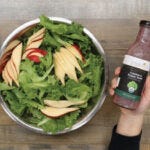
Arrange lettuce and sliced pears onto four dinner plates. Drizzle about 1 tablespoon of the Cranberry Poppyseed Vinaigrette* over the top of the lettuce and pears on each plate.
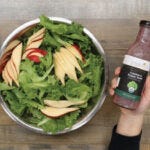
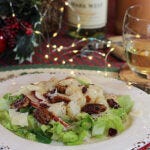
Serve the salad topped with the seared scallops and candied pecans [1].
FOOTNOTES:
*Cranberry Poppyseed Vinaigrette is available seasonally at Wildtree.
[1] For an added flavor dimension, garnish your salad. We love these possibilities:
Dried cranberries or Pomegranate arils - add a pop of red color and an extra nutritional boost.
Shaved or grated Parmesan cheese – add for a nutty, rich flavor.
Shaved or grated Asiago cheese - having a flavor reminiscent of Parmesan, it's a bit nuttier and creamier.
Accompaniment, Dinner, Lunch
American, International
Gluten Free
20-Minute Meal, Christmas Recipes, entertaining, Fresh, Holiday Recipes, quick and easy, Romantic Dinners, salad, Seafood
Recipe Card powered by WP Recipe Maker (Nutritional values are an approximation. Actual nutritional values may vary due to preparation techniques, variations related to suppliers, regional and seasonal differences, or rounding.) Copyright © 2017-2023 Kymberley Pekrul | GfreeDeliciously | gfreedeliciously.com | All content and photographs are copyright protected. The sharing of this recipe is both encouraged and appreciated. However, copying and/or pasting full recipes to any social media is strictly prohibited. Please read my Photo Use Policy for detailed guidelines and further clarification. Be among the first to know whenever we post a new recipe by following us on Pinterest, Instagram, Facebook, and Twitter. So follow along, and let’s make food GfreeDeliciously together!